
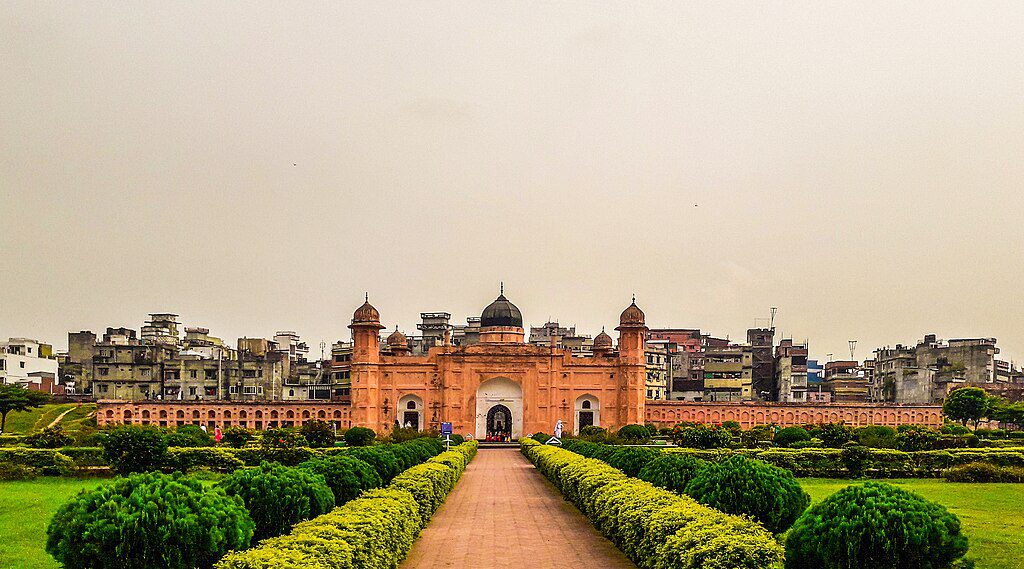
Lalbagh Fort: The Unfinished Dream of Mughal Dhaka
In the heart of Old Dhaka, where the air carries the scent of spices and echoes of prayer, stands Lalbagh Fort, a monument wrapped in mystery, romance, and history. Built over three centuries ago, this fort remains one of Bangladesh’s most iconic landmarks and a timeless witness to Dhaka’s Mughal past.
A Fortress of Royal Ambition
The story of Lalbagh Fort begins in 1678 when Prince Muhammad Azam, the son of the Mughal Emperor Aurangzeb, was appointed as the Subahdar of Bengal. He chose the banks of the Buriganga River to build a grand fort that would serve both as a royal residence and a military base. The fort, originally called Aurangabad Fort, was later renamed Lalbagh after the area where it stands.
However, destiny had other plans. Prince Azam was soon called back to Delhi by his father, leaving the fort incomplete. His successor, Shaista Khan, took charge of Bengal and continued the construction. Yet, tragedy struck when Shaista Khan’s beloved daughter, Pari Bibi, died inside the fort. Heartbroken and considering the fort unlucky, Shaista Khan stopped the construction permanently. Since then, the fort has stood as an unfinished dream of the Mughal Empire which is beautiful, silent, and eternal.
The Tale of Pari Bibi
Every traveler who steps into Lalbagh Fort feels the spirit of Pari Bibi. Her tomb, made of white marble and black basalt, stands gracefully at the center of the complex. Legends say that Pari Bibi was a woman of great beauty and kindness, and her death cast a shadow of sorrow over the fort. Her resting place became the emotional core of Lalbagh, turning it from a royal project into a symbol of love and loss.
Architecture That Whispers History
Lalbagh Fort covers nearly 18 acres of land and showcases the finest examples of Mughal architecture in Bengal. The main complex includes three significant buildings: the Tomb of Pari Bibi, the Diwan-i-Aam (Hall of Public Audience), and the Lalbagh Mosque.
The Diwan-i-Aam, with its tall arches and intricate details, once served as the governor’s residence and audience hall. Behind it lies an underground chamber that was believed to be used for secret meetings. The Lalbagh Mosque, still active today, stands proudly on the western side. Its three domes and delicate ornamentation reflect the grandeur and elegance of seventeenth-century Islamic design.
Beautiful gardens and water channels run through the complex, inspired by the Mughal concept of charbagh, representing paradise on earth. When the sun sets, the red walls glow warmly, and the call to prayer fills the air to creating a moment where time seems to pause.
From Imperial Stronghold to Public Treasure
Over the centuries, Lalbagh Fort has seen empires rise and fall. It witnessed the decline of Mughal power, the arrival of the British, and the birth of Bangladesh. Today, it stands not just as a relic of the past but as a symbol of the country’s cultural pride. The fort is maintained by the Department of Archaeology and attracts thousands of visitors every week.
Interesting Facts That Make Lalbagh Fort Special
- The fort was once surrounded by the Buriganga River, which has since changed its course.
- Underground passages are believed to exist beneath the fort, though many are now sealed for safety.
- The name “Lalbagh” means “Red Garden,” referring to the brick-red hue of its walls.
- Some historians believe that the design of Lalbagh Fort influenced later Mughal architecture in Bengal, including Ahsan Manzil
A Place Where Time Stands Still
Walking through the gardens of Lalbagh Fort feels like stepping into another era. Children play where soldiers once marched. Couples sit quietly near the fountains. The sound of prayer from the nearby mosque blends with laughter and life, reminding everyone that this city’s soul has never stopped beating.
Lalbagh Fort is not just a monument. It is a story of love, ambition, and resilience. It is the reflection of a city that embraces its past while dreaming of the future.
Experience Lalbagh Fort with Trip Glider
Discover the untold stories of Old Dhaka and the majestic beauty of Lalbagh Fort with Trip Glider. Walk through history with local experts who bring the Mughal era to life through stories and experiences you will never forget.
Follow Us On: