
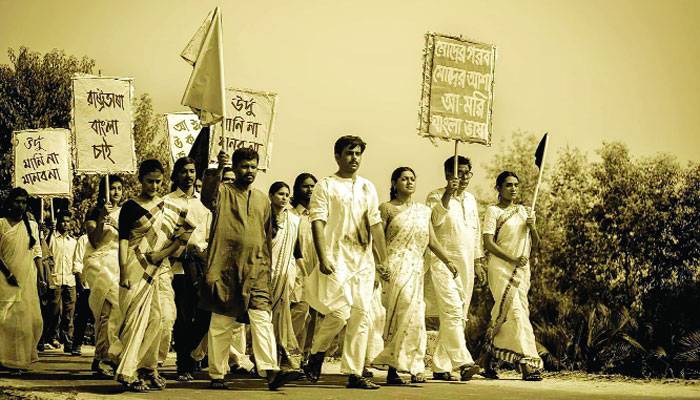
The Language Movement of 1952: When Words Became Freedom
In the heart of Dhaka, beneath the soft white columns of the Shaheed Minar, lives the story of a movement that changed the destiny of a nation. The Language Movement of 1952, known as Bhasha Andolon, was not only a protest but a cry for identity, culture, and pride. It was the voice of millions who stood up to protect the soul of their mother tongue, Bangla.
The Beginning of the Struggle
After the partition of India in 1947, Bangladesh became part of Pakistan and was called East Pakistan. Although the majority of people spoke Bangla, the central government declared Urdu as the only state language. This decision deeply hurt the people of East Bengal, who believed that their language was more than just words , it was a symbol of their heritage, literature, and way of life.
Students and teachers from Dhaka University and other institutions began to organize protests. They understood that losing their language would mean losing their identity. Soon, the movement spread from classrooms to the streets, uniting people from all walks of life under one dream , to protect Bangla.
The Day the World Remembered
On 21 February 1952, the government imposed Section 144, which prohibited public gatherings. But the students refused to remain silent. They marched from Dhaka University toward the Dhaka Medical College area, chanting “Rashtra bhasha Bangla chai,” meaning “We want Bangla as our state language.”
The police opened fire on the peaceful crowd. Young students like Abdul Jabbar, Rafiq Uddin Ahmed, Abul Barkat, and Shafiur Rahman were killed. Their blood stained the streets of Dhaka, but their sacrifice awakened a nation. The pain and courage of that day became the seed of Bangladesh’s unity and resistance.
Victory of the Mother Tongue
The movement did not stop there. The people continued their protests with determination and faith. Finally, in 1956, Bangla was officially recognized as one of the state languages of Pakistan. It was a victory earned by courage and sacrifice, proving that language is not only a means of communication but the heartbeat of a people’s identity.
The spirit of the Language Movement later inspired the Liberation War of 1971, when Bangladesh finally achieved independence. The lessons of 1952 taught the people to stand firm for their rights, no matter the cost.
A Global Legacy
The message of 21 February reached the entire world. In 1999, UNESCO declared it as International Mother Language Day, to honor linguistic and cultural diversity across all nations. Every year, people around the world pay tribute to those who gave their lives so that future generations could speak their mother tongue freely.
Visit Shaheed Minar with Trip Glider
If you wish to feel the emotion and pride behind this historic movement, visit the Shaheed Minar in Dhaka with Trip Glider. Walk through the place where young hearts once stood with courage, and listen to the silent voice of history that still echoes through its pillars.
Join Trip Glider and explore the story of the Language Movement of 1952, a story that reminds the world that freedom begins with the right to speak in one’s own language.
Follow Us On: