
The Liberation War of Bangladesh 1971 : The Birth of a Nation
The year 1971 remains etched in the heart of every Bangladeshi. It was the year when an entire nation rose with courage, sacrifice, and an unbreakable dream, the dream of freedom. The Liberation War of Bangladesh was not just a political struggle; it was a people’s movement for justice, identity, and dignity.
The Struggle for Identity
Before independence, Bangladesh was known as East Pakistan, separated by more than a thousand miles from West Pakistan. Despite having a larger population, the people of East Pakistan faced continuous political and economic discrimination. The Bengali language, culture, and identity were ignored, and their voices were silenced.
The turning point came in 1952, during the Language Movement, when students and activists sacrificed their lives demanding recognition for the Bangla language. This was the first spark of nationalism that later grew into a full struggle for independence.
The Voice that Awakened a Nation
On 7 March 1971, Bangabandhu Sheikh Mujibur Rahman, the leader of the Awami League, delivered his historic speech at the Racecourse Field (now Suhrawardy Udyan). Standing before a sea of people, he declared, “The struggle this time is the struggle for our emancipation, the struggle this time is the struggle for our independence.”
His words lit the flame of freedom in every heart across the land. The people were ready to fight for their nation, no matter the cost.
The Dark Night and the Resistance
On the night of 25 March 1971, the Pakistani military launched Operation Searchlight, a brutal attack on Dhaka and other parts of the country. Thousands of innocent men, women, and children were killed in one night. But the terror could not break the spirit of the Bengali people.
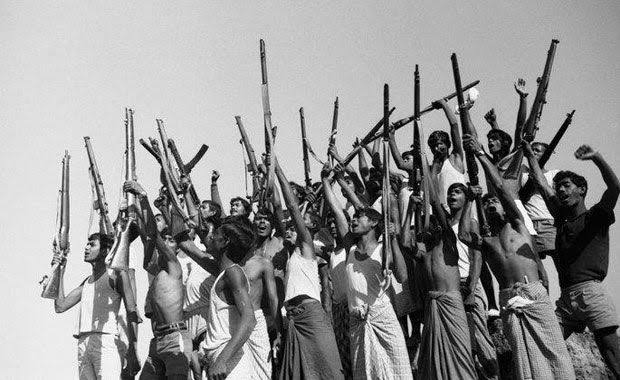
The next day, 26 March 1971, the independence of Bangladesh was declared. The nine-month war had begun. Ordinary farmers, students, and villagers took up arms and joined the Mukti Bahini (Freedom Fighters) to defend their land. Women played a vital role as nurses, messengers, and even fighters.
Across the villages, fields, and rivers of Bangladesh, the resistance grew stronger. Every home became a shelter for freedom fighters, and every heart carried the dream of an independent country.
Victory and the Birth of Bangladesh
After nine months of struggle, with the support of the Indian army and global voices for justice, the war finally came to an end. On 16 December 1971, the Pakistani army surrendered at the Racecourse Field, marking the victory of the Bengali people and the birth of Bangladesh, a free and independent nation.
The air was filled with tears, joy, and the cry of “Joy Bangla!” as the red and green flag of Bangladesh was raised for the first time.
A Legacy of Courage and Sacrifice
The Liberation War of 1971 cost millions of lives and left deep scars, but it also gave Bangladesh its greatest gift which is freedom. Every monument, every martyr’s grave, and every old photograph tells the story of bravery, resilience, and love for the motherland.
Visitors today can explore many sites that hold the memories of this struggle, including Suhrawardy Udyan, National Martyrs’ Memorial in Savar, Martyred Intellectuals Memorial in Rayerbazar, and Liberation War Museum in Dhaka. Each of these places carries the emotion and pride of a nation that fought for its right to exist.
Visit the Land of Freedom with Trip Glider
Join Trip Glider to walk through the paths where history was written from Suhrawardy Udyan, where the final surrender took place, to the Liberation War Museum, where the story of 1971 is preserved with emotion and honor.
Experience the courage, sacrifice, and victory that define Bangladesh. Visit the land of freedom with Trip Glider, and let the spirit of 1971 inspire you to see Bangladesh not just as a destination, but as a story of hope and humanity.
Follow Us On: